
Floating Hide vs. Ground Hide: When to Use Which

For waterbird photography, there are two main approaches: working from the shore with a ground hide, or right out on the water with a floating hide. Both have their strengths, and the right choice mostly comes down to the perspective you're after and how much preparation you're willing to put in. In this article, we put them side by side.
What exactly is a floating hide?
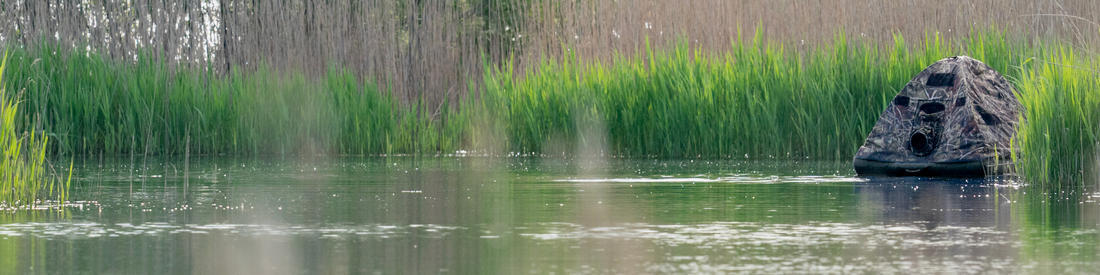
A floating hide is a camouflage tent that literally floats on the water, with you and your camera in or below it. You move along with the water surface, at eye level with ducks, grebes, waders and other waterbirds — a perspective you'll never reach from the shore.
What is a ground hide?
A ground hide, such as the Falco series, is set up on the bank, among the reeds, or at another fixed spot bordering the water. You stay dry, can adjust your setup more easily, and the hide is quicker to put up and take down.

Advantages of a floating hide
The biggest advantage is the perspective: you shoot at your subject's eye level, which produces a far more intimate and immersive photo than shooting down from the bank. Waterbirds also often accept a floating hide faster than a silhouette on the shoreline, since it isn't something they associate with danger on land. You can also move toward a group of birds, rather than waiting for them to happen to pass by.
Advantages of a ground hide
A ground hide is more accessible: no swimming skill or special preparation needed, dry and comfortable, and suited to longer sessions without the physical strain of lying in the water. It's also practical wherever there's no suitable, safe water to float on, or where water depth or current make a floating hide impractical.
Practical considerations: what suits your situation?
Choose a floating hide if you're specifically after that unique eye-level perspective on waterbirds, and you're willing to practise the technique and preparation involved. Choose a ground hide if you'd rather stay dry and comfortable, want less prep time, or are shooting somewhere floating isn't possible or safe. Beginners in waterbird photography often start from the shore, then move on to a floating hide once they've got the basic technique down.
Can you combine them?
Absolutely. Many experienced waterbird photographers use both, depending on the location and season — a ground hide for everyday sessions close to home, a floating hide for the days you're specifically after that low perspective on a larger body of water.
Conclusion
There's no single right answer — only the right choice for your situation. Browse our full range of photo hides, including floating hides and ground hides, and check out our photo hide buying guide for a complete overview of all the types.